Skip to content
PTTD Treatment and Arch Reconstruction in Avon, Elyria, and Lorain
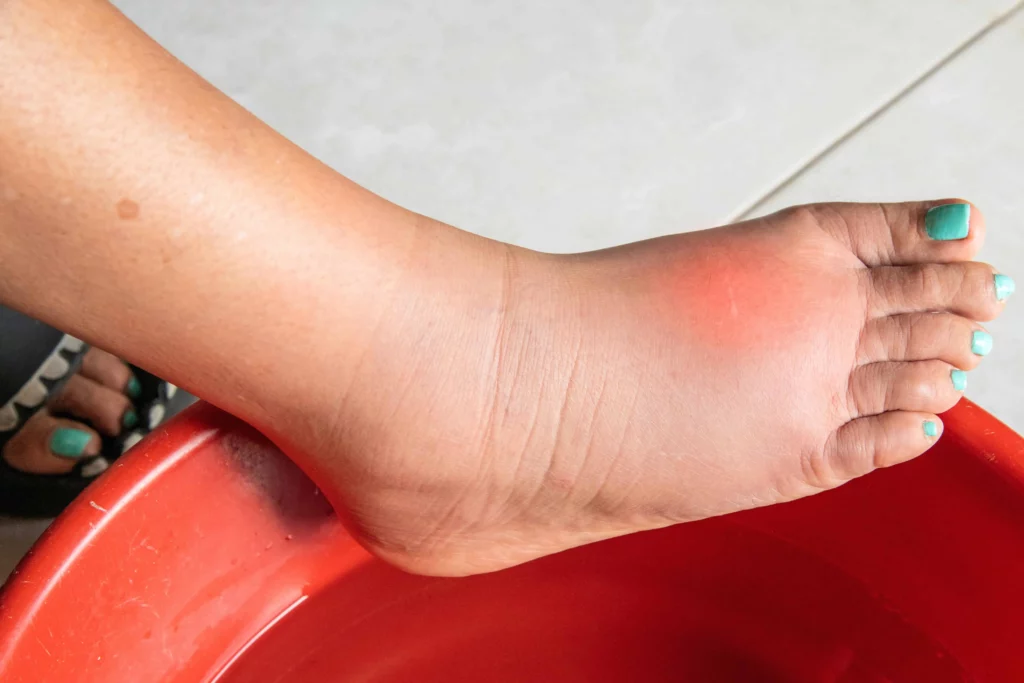
When the arch of the foot begins to collapse and ankle pain sets in, the cause may be deeper than it seems. At Integrity Foot and Ankle, we diagnose and treat posterior tibial tendon dysfunction (PTTD), a progressive condition where the tendon supporting the arch becomes inflamed or torn. This tendon plays a critical role in foot stability, and when it’s compromised, it can lead to a flatfoot deformity and chronic discomfort if left unaddressed.
PTTD often starts with mild pain along the inner ankle or foot, especially after physical activity. Without intervention, symptoms can worsen, making it difficult to stand, walk, or wear regular shoes comfortably. Our team offers tailored, step-by-step care to support healing, relieve pain, and restore the integrity of the foot’s structure, whether through conservative methods or surgical correction when needed.
Benefits of PTTD Treatment
- Reduces pain and inflammation along the inner ankle and foot
- Supports and restores the natural arch structure
- Prevents the progression of flatfoot deformity
- Improves stability and balance during walking or standing
- Restores tendon function and overall foot mechanics
- Offers both non-surgical and surgical treatment paths
- Helps patients return to regular activity with less discomfort
- Customized orthotic support designed for long-term relief
- Minimizes the risk of long-term joint and tendon damage
- Improves quality of life through personalized foot care
Treatment Options for Posterior Tibial Tendon Dysfunction
Non-Surgical Approaches
Rest, Ice, and Anti-Inflammatory Medication
Reducing activity and applying ice can help control inflammation in early stages. Nonsteroidal anti-inflammatory medications (NSAIDs) may be recommended to reduce pain and swelling.
Custom Orthotics and Ankle Bracing
Orthotic inserts support the arch and improve foot alignment, while ankle braces provide added stability during movement. Both are especially effective in early or moderate cases of PTTD.
Physical Therapy
Targeted exercises strengthen the foot and ankle muscles, improving tendon function and mobility. Therapy may include stretching, balance work, and gait training to support recovery.
Surgical Options
Tendon Repair or Transfer
In cases where the posterior tibial tendon is torn or severely damaged, surgical repair or replacement with a nearby tendon can restore function. This approach aims to preserve the arch and correct instability.
Flatfoot Reconstruction
When significant arch collapse has occurred, a combination of tendon procedures and bone realignment may be required. This complex surgery is customized based on the extent of deformity and joint involvement.
What to Expect Before and After Treatment
Before Treatment
- Physical exam focused on foot alignment and tendon strength
- Imaging (X-rays, MRI, or ultrasound) to evaluate tendon condition
- Discussion of symptoms, activity level, and treatment preferences
- Fitting for orthotics or brace (if applicable) and pre-surgical planning (if needed)
After Treatment
- If non-surgical: gradual return to activity with bracing or orthotic support
- If surgical: recovery includes a period of immobilization, followed by physical therapy
- Regular follow-ups to assess healing, foot function, and prevent recurrence
- Guidance on footwear, ongoing support, and long-term care strategies
The Four Stages of PTTD: Why Early Intervention Matters
PTTD is a progressive condition that advances through four clinical stages. The treatments available at each stage differ significantly, and the complexity of interventions increases substantially as the condition progresses. Understanding where you are in this progression is the most important first step.
- Stage I: Inflammation and pain along the posterior tibial tendon within the ankle, with the arch and foot structure still intact. Conservative management is highly effective at this stage, helping most patients avoid progression to more advanced deformity.
- Stage II: This is when the arch begins to flatten visibly, and the foot starts to turn outward. The deformity is still flexible at this stage, meaning the foot can be passively repositioned into a corrected alignment. Evaluation of PTTD stages and symptoms at Stage II opens the door to conservative bracing and orthotic management that can halt progression before the joint becomes fixed.
- Stage III: Presents with a rigid, collapsed arch that cannot be passively corrected, and the hindfoot joints are fixed in a malaligned position. Conservative care is ineffective, necessitating surgical reconstruction to correct the deformity and relieve pain.
- Stage IV: Progression of instability can lead to tibiotalar arthritis and hindfoot collapse, marking the most complex stage and requiring extensive surgical intervention. Patients must first undergo Stages I, II, and III, making early evaluation and treatment essential to prevent this outcome.
Signs Your Posterior Tibial Tendon Is Failing
Three clinical signs are particularly useful for assessing whether a patient’s ankle pain or changing foot shape may be related to PTTD.
- The Too Many Toes Sign: Have someone look at your heel from directly behind while you stand normally. If more toes than expected are visible on the outside of the foot, the foot is collapsing outward, a hallmark of posterior tibial tendon failure.
- The Single-Limb Heel Rise Test: Stand on one foot and attempt to rise onto your tiptoes. If you cannot perform a smooth, controlled heel raise or the attempt produces significant pain or wobbling, the posterior tibial tendon is likely torn or severely weakened.
- Inner Ankle Swelling: Persistent puffiness along the inside of the ankle that does not resolve with rest is a consistent early sign of posterior tibial tendon inflammation. Most patients describe it as a fullness that worsens with activity throughout the day.
Non-Surgical Management for Stages I and II
For patients presenting in Stages I and II, conservative management can effectively reduce pain, offload the failing tendon, and halt deformity progression when initiated promptly.
- Immobilization: A walking boot removes the mechanical load from the posterior tibial tendon entirely, allowing acute inflammation to subside and providing the tissue with a window for partial recovery. This is typically the first intervention for patients presenting with significant pain and swelling.
- Custom Bracing with a Richie Brace: A specialized ankle-foot orthotic relieves mechanical demand on the tendon during walking by providing external arch support and controlling the hindfoot position. This brace is specifically designed for the biomechanical demands of PTTD in patients who are not yet surgical candidates or who prefer to avoid surgery.
- Custom Orthotics: Support the arch and control overpronation in Stage I patients whose tendon still has adequate function to benefit from biomechanical correction. Combined with physical therapy targeting Achilles flexibility and posterior tibial tendon strengthening, orthotics for flat feet are a cornerstone of early-stage management.
Surgical Reconstruction for PTTD
When conservative care fails to stop progression, or when the patient presents at Stage III or Stage IV, ankle tendon reconstruction and arch reconstruction surgery provide the definitive structural solution.
Tendon Transfer
A healthy tendon, usually the flexor digitorum longus, is rerouted to replace the failed posterior tibial tendon. When combined with calcaneal osteotomy for hindfoot alignment, this reconstruction creates a durable arch, enabling patients to return to normal footwear.
Calcaneectomy
The heel bone is precisely cut and repositioned to shift the mechanical axis of the hindfoot back beneath the ankle, thereby physically recreating the alignment that the collapsed arch has lost. This bone work is a critical component of most PTTD reconstructions.
Joint Fusion (Arthrodesis)
Reserved for Stage III and Stage IV patients whose hindfoot or ankle joints have developed fixed deformity or advanced arthritis. Fusion eliminates painful motion and provides a permanently stable, corrected foot position. Arch reconstruction surgery at this stage is more extensive than earlier-stage procedures, reinforcing why early intervention consistently produces better outcomes.
Recovery Timeline: Life After PTTD Surgery
PTTD reconstruction is a major surgical procedure that requires a dedicated recovery commitment. Most patients progress through the following timeline.
- Weeks 0-6: Non-weight-bearing in a cast or splint is essential during the initial healing phase to protect the tendon repair and bone work. Strict adherence to non-weight-bearing status during this phase is critical to the success of the reconstruction.
- Weeks 6-12: Transition to a walking boot with progressive protected weight-bearing begins as healing is confirmed on imaging. Range-of-motion exercises are initiated during this phase to prevent stiffness.
- Months 3-6: Transition to supportive shoes and intensive physical therapy to rebuild posterior tibial tendon strength, restore balance, and retrain the gait pattern with the corrected foot structure.
Patients who adhere to the recovery protocol can return to normal footwear and daily activities. Your surgeon will outline a timeline and milestones at your pre-operative consultation.
FAQs
Can PTTD heal on its own?
Early-stage PTTD inflammation can improve with rest and conservative treatment, but a stretched or partially torn posterior tibial tendon won’t tighten on its own. The underlying laxity persists after pain subsides, and continued strain without support can lead to further deformity. Clinical intervention is necessary to stop this progression.
What happens if PTTD is left untreated?
Untreated PTTD progresses from inflammation to arch collapse, rigid deformity, and finally ankle arthritis, with each stage requiring increasingly complex surgery. Stage IV requires fusion surgery that could have been avoided with earlier treatment. Fallen arch surgery in Lorain and across our West Side offices is significantly more straightforward at Stage II than at Stage IV.
Is PTTD surgery a major procedure?
PTTD reconstruction with tendon transfer and calcaneal osteotomy is a major surgery requiring several months of dedicated recovery. It provides a lasting solution for a progressive condition that might otherwise require more extensive surgery. Patients who fully commit to the recovery process often find it worthwhile for the long-term relief it provides.
Will I need a brace forever?
For some Stage III patients who are not candidates for surgery, long-term bracing with an ankle-foot orthotic effectively manages symptoms and maintains function. For those who have surgery, the goal is to restore the arch so that normal footwear and custom orthotics can be used for long-term care without relying on a rigid brace.