Skip to content
Hammertoe Surgery and Toe Straightening in Avon, Elyria, and Lorain
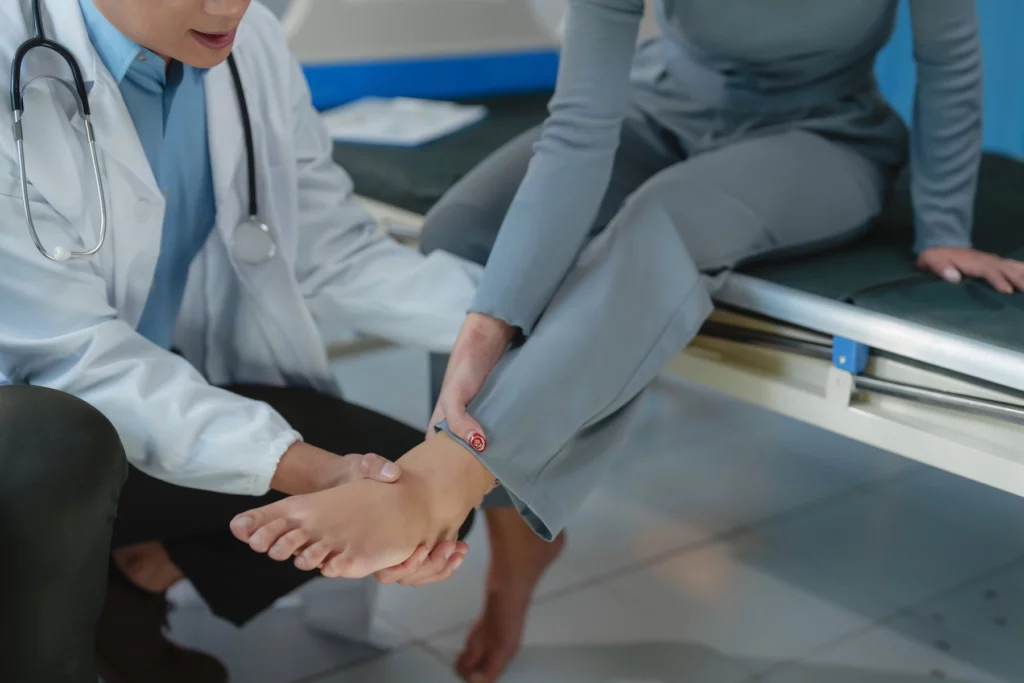
Hammertoe surgery provides patients with a permanent structural solution when conservative care has failed. If you have spent months dealing with toes that curl or cross, painful corns that keep returning no matter how carefully you choose your shoes, or joints that press painfully against every pair of footwear you own, you already know that padding and wider shoes only go so far. At Integrity Foot and Ankle Associates, Dr. Wenowitz and Dr. Norris combine board-certified surgical expertise with modern minimally invasive techniques to straighten your toes, restore your comfort, and help you move freely again across Avon, Elyria, and Lorain.
For West Side residents who spend long shifts on hard floors at Mercy Health or University Hospitals Elyria Medical Center, walk the trails at Cascade Park, or want to wear normal shoes to work without wincing by midday, hammertoe deformity is not a cosmetic inconvenience. It is a structural problem that worsens with every step taken without intervention. Our approach prioritizes both functional correction and aesthetic results. We do not simply address the pain. We address the underlying structural problem that is causing it, so the correction lasts.
When Is Surgery Necessary for Hammertoes?
Hammertoes are progressive deformities, meaning they do not stay the same and they do not improve on their own. In the early stages, a hammertoe is considered flexible, which means it can still be straightened manually with gentle pressure. At this stage, conservative measures such as padding, orthotics, and footwear modifications can help manage symptoms and slow progression.
As the condition advances, the tendons and joint capsule on the top of the toe shorten and tighten until the deformity becomes rigid and the toe can no longer be straightened manually. At this point, surgery is the only option for structural correction. Patients with bunions frequently develop hammertoes as a secondary deformity, since the drifting big toe places ongoing pressure on the adjacent toes and accelerates their misalignment.
Toe straightening surgery in Lorain and across our West Side offices is recommended when any of the following are present.
- Pain that prevents normal walking or limits daily activity despite conservative management
- Open sores, ulcers, or wounds developing on the toe joints from friction against footwear
- A rigid deformity that cannot be manually reduced
- Corns or calluses that recur repeatedly at the same location on the toe
- Significant shoe irritation that prevents wearing any standard footwear comfortably
The longer a rigid hammertoe goes untreated, the more involved the surgical correction required. Early evaluation gives patients the most straightforward path to resolution.
Advanced Surgical Techniques at Integrity Foot and Ankle
Our hammertoe surgeon in Avon, OH, team selects the most appropriate surgical technique based on the severity of the deformity, the flexibility or rigidity of the affected joint, and the overall structure of the patient’s foot. The following approaches are available at our Avon, Elyria, and Lorain offices.
Tendon Rebalancing
It is used for flexible hammertoes where the underlying joint structure is still intact. By releasing or lengthening the contracted tendon on the top of the toe and rebalancing the forces acting on the joint, the toe is repositioned to lie flat without requiring bone work. This approach is associated with a faster recovery and is ideal for earlier-stage deformities caught before rigidity develops.
Joint Fusion (Arthrodesis)
It is the standard approach for rigid hammertoes in which the joint has become fixed in a bent position. The procedure involves removing a small section of bone from the affected joint and fusing the remaining surfaces into a straightened alignment using modern internal implants. Unlike older techniques that required wires or pins protruding from the toe, our surgeons use internal fixation whenever possible, which reduces the risk of infection, eliminates post-operative anxiety associated with external hardware, and supports a more comfortable recovery.
Minimally Invasive Repair
It uses small keyhole incisions to access and correct the deformity without disrupting the surrounding soft tissue. Scarring is reduced, healing is faster, and the post-operative experience is significantly more manageable than traditional open approaches. Where the anatomy and severity of the deformity allow, our surgeons prioritize this approach.
Traditional vs. Modern Hammertoe Correction
Recent advancements in hammertoe surgery have moved away from external fixation, which involved pins protruding from the toe. This method required careful wound care, limited footwear options, and posed infection risks, causing anxiety for patients. Instead, internal fixation with small titanium implants is now preferred, as it allows for healing beneath the skin, providing a cleaner environment and a more comfortable recovery.
Integrity Foot and Ankle Associates employs minimally invasive hammertoe repair with internal fixation for eligible patients, ensuring optimal outcomes with minimal disruption to daily life.
Recovery Roadmap: What to Expect
Hammertoe surgery recovery time follows a predictable progression for most patients. Here is a general timeline based on outcomes at our Avon, Elyria, and Lorain offices.
- Days 1-7: The foot is elevated to minimize swelling, and a specialized surgical shoe is worn to protect the operative site. Most patients can bear weight in the surgical shoe from day one.
- Weeks 2-4: Stitches are removed, and the patient transitions to increased weight-bearing as healing progresses. Light daily activities resume for most patients during this phase.
- Weeks 6-8: Most patients return to standard athletic shoes and resume normal daily activities. Return to high-impact exercise or sport is assessed individually based on surgical complexity and healing progress.
Your surgeon reviews your progress at each follow-up visit and provides specific guidance on activity clearance based on clinical examination and imaging findings.
Expert Surgical Care for Lorain County
Our board-certified surgeons provide expert hammertoe correction for patients in Avon, Elyria, and Lorain. We also serve the nearby communities of Avon Lake, North Ridgeville, and Amherst with convenient outpatient surgical options, and most patients can reach our offices in 10-15 minutes on familiar West Side routes.
Outpatient surgery means you go home the same day, and having your follow-up care team close to home makes the recovery process significantly more manageable. Our offices coordinate care across all three locations, so every post-operative visit is as convenient as possible.
Explore our full surgical options
Meet Our Board-Certified Surgeons
Straighten Your Toes – Schedule a Consultation
FAQs
How long is the recovery for hammertoe surgery?
Most patients transition back to standard athletic shoes within 6 to 8 weeks of hammertoe surgery. The first week focuses on elevation and protection in a surgical shoe; weeks two through four involve a gradual return to weight-bearing as stitches are removed; and weeks 6 through 8 mark the return to normal footwear for most patients. Depending on your procedure and healing progress, your surgeon will provide a specific timeline.
Will my toe be permanently straight?
Yes, in the vast majority of cases. Surgical correction addresses the structural cause of the deformity by fusing the joint in a straightened position using internal fixation. Unlike conservative measures that manage symptoms without correcting the underlying problem, surgery produces a permanent structural fix. Wearing appropriately supportive footwear after recovery helps maintain the result long term.
Can I have bunion and hammertoe surgery at the same time?
Most patients are walking in a specialized surgical shoe within a few days of neurectomy. Transition to standard athletic footwear typically occurs within 2 to 4 weeks, depending on healing progress. Return to higher-impact activity and sport is assessed individually but generally occurs within 6 to 8 weeks after the procedure for most patients.
Is hammertoe surgery painful?
The procedure is performed under local anesthesia, meaning you are comfortable throughout. Post-operative pain is managed with a structured protocol that typically includes anti-inflammatory medication and elevation during the first several days. Most patients describe their recovery as more comfortable than they anticipated, particularly with the internal fixation approach, which eliminates the discomfort associated with external pins.