Skip to content
Comprehensive Foot and Ankle Fracture Care in Avon, Elyria, and Lorain
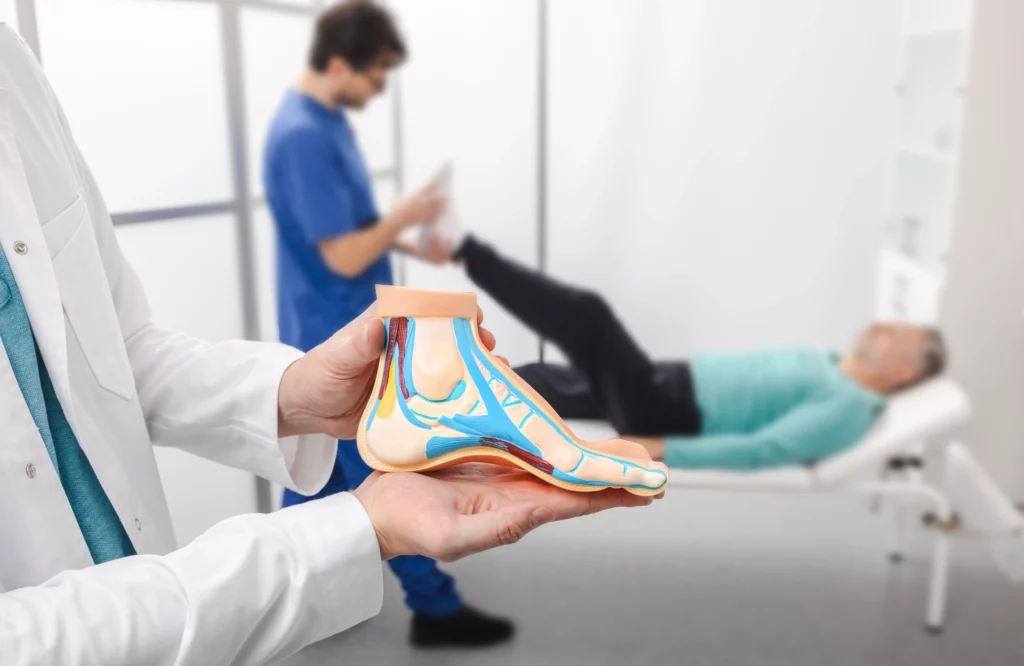
Foot and ankle fracture care should not begin with a four-hour wait in the emergency room and a temporary splint. The decisions made in the first 24 to 48 hours, how the fracture is diagnosed, whether displacement is identified, and how the bone is stabilized, directly determine how well it heals and whether chronic pain or arthritis develops in the years that follow. At Integrity Foot and Ankle Associates, our board-certified surgical team provides direct access to specialists for suspected fractures at our Avon, Elyria, and Lorain offices, with on-site digital imaging and same-visit surgical planning when urgent intervention is needed.
Whether you rolled your ankle stepping off a curb on Broad Street in Elyria, landed wrong during a game at North Ridgeville’s athletic complex, or dropped something heavy on your foot during a shift at one of Lorain County’s manufacturing facilities along the Lake Erie corridor, the last place you want to spend your afternoon is a general emergency department waiting room. You do not need to go to the emergency room first. Come directly to us, get an accurate diagnosis from a podiatric surgeon who specializes in foot and ankle trauma, and leave with a definitive treatment plan the same day.
Is It a Sprain or a Fracture? Signs You Need an X-Ray
The symptoms of a sprained ligament and a broken bone overlap significantly, and patients often cannot distinguish between them without imaging. The following signs indicate that an X-ray is warranted rather than home management with ice and rest.
- Inability to bear weight through four full steps immediately after the injury
- Pinpoint tenderness directly over a bone rather than soft tissue
- Significant swelling and bruising are developing rapidly within the first hour
- A visible deformity or abnormal angle in the foot or ankle
- A sensation or sound of a crack or snap at the moment of injury
- Pain that is worsening rather than improving 24 to 48 hours after the incident
Our offices provide on-site digital X-rays that deliver immediate, high-resolution imaging at your first visit. A broken foot doctor in Avon, OH can review your imaging, confirm or rule out a fracture, and begin treatment without the delays of emergency department triage.
Common Fractures We Treat
Stress Fractures
Stress fractures are hairline cracks from repetitive loading rather than a single traumatic event. They are common in runners and student-athletes across Avon Lake and North Ridgeville. The hallmark symptom is pinpoint tenderness over a specific bone that worsens with activity and improves with rest. Stress fracture treatment in Lorain begins with imaging confirmation and a structured offloading protocol before the crack progresses to a complete fracture.
Ankle Fractures
Ankle fractures involve breaks of the lateral or medial malleolus, the bony prominences on either side of the ankle joint. Stable fractures can often be managed in a walking boot, while displaced or unstable fractures require surgical fixation to restore correct joint alignment. Ankle fracture surgery in Elyria and at our other offices is performed using internal fixation techniques that restore precise anatomical alignment and protect the joint long term.
Jones Fractures
A Jones fracture occurs at the base of the fifth metatarsal, a region with poor blood supply that slows and unpredictably delays healing. High-demand athletes often require surgical fixation for reliable healing and a faster return to activity. Any pain on the outer edge of the foot following an injury warrants imaging to rule out this specific fracture pattern.
Lisfranc Injuries
Lisfranc injuries involve fractures or ligament damage at the tarsometatarsal joints and are often misdiagnosed as sprains due to subtle X-ray findings. If undiagnosed, these injuries can lead to midfoot collapse and arthritis, which might be preventable with early stabilization. Any midfoot pain following a twisting injury, particularly with bruising on the bottom of the foot, warrants evaluation by a foot trauma specialist.
Toe and Metatarsal Fractures
Toe fractures from stubbing accidents and metatarsal fractures from falling objects are among the most common fractures we treat. While many toe fractures respond to buddy taping and protective footwear, fractures involving joint surfaces or significant displacement require more careful management to prevent long-term deformity and pain.
When Is Surgery Necessary for a Broken Bone?
Not every fracture requires surgery, but the following situations consistently indicate that internal fixation will produce a better outcome than immobilization alone.
- A displaced fracture where bone ends have shifted out of anatomical alignment
- A fracture involving a joint surface where precise alignment prevents post-traumatic arthritis
- An unstable fracture pattern that cannot be reliably held in position by a cast or boot
- A Jones fracture in a high-demand athlete requires reliable accelerated healing
- A Lisfranc injury with joint displacement requiring precise midfoot realignment
When surgery is necessary, Dr. Wenowitz and Dr. Norris use internal fixation methods like plates, screws, or intramedullary devices to maintain proper alignment during healing. This approach aims to ensure the bone heals properly and prevents chronic pain from misalignment. At Integrity Foot and Ankle Associates, fracture repair surgery prioritizes long-term outcomes over short-term immobilization.
The Recovery Roadmap: Healing Your Fracture
Broken ankle recovery timelines and foot fracture healing follow a predictable biological cycle that varies by fracture type, severity, and whether surgical fixation was required.
- Weeks 0-6: Immobilization in a cast or boot with non-weight-bearing or protected weight-bearing status. Adherence to weight-bearing restrictions during this phase is critical to preventing displacement or re-fracture.
- Weeks 6-12: Progressive weight-bearing is introduced as imaging confirms adequate bone healing. Physical therapy begins to restore range of motion, strength, and proprioception.
- Month 3 and beyond: Transition to normal footwear and gradual return to impact activities based on clinical and imaging assessment at each follow-up visit.
Trusted Trauma Care for Lorain County
Integrity Foot and Ankle Associates provides urgent fracture evaluations for patients in Avon, Elyria, and Lorain. We offer fast-tracked appointments for suspected breaks to ensure residents in Amherst, Sheffield, and Avon Lake get the specialist care they need immediately, without the delays of a general emergency department visit.
Our board-certified surgical team is equipped to perform imaging, diagnose, and begin definitive treatment at your first visit. Call our Avon, Elyria, or Lorain office directly to schedule a same-day or next-day appointment for fracture evaluation.
FAQs
How do I know if my foot is broken?
The most reliable signs are inability to bear weight through four steps, pinpoint tenderness directly over a bone, and significant rapid swelling or bruising. Some fractures, particularly stress fractures and Lisfranc injuries, produce subtler symptoms that can easily be mistaken for a sprain. On-site digital X-rays at any of our three offices provide a definitive answer at your first visit.
Can a podiatrist set a broken bone?
Yes. Podiatric surgeons are the primary specialists for all bone trauma below the knee. Dr. Wenowitz and Dr. Norris perform both closed reduction and internal fixation procedures for fractures ranging from simple toe breaks to complex Lisfranc injuries and ankle fractures requiring plate and screw fixation.
How long does it take for a foot fracture to heal?
The typical bone-healing cycle for most foot and ankle fractures is 6 to 8 weeks, after which progressive weight-bearing and physical therapy begin. Complete return to impact activity typically occurs between 3 and 6 months, depending on fracture severity and whether surgical fixation was required.
What is a displaced fracture?
A displaced fracture is one in which the broken bone ends have shifted out of their correct anatomical alignment. Bone that heals in a malaligned position places abnormal stress on adjacent joints, consistently producing post-traumatic arthritis and chronic pain over time. Displaced fractures almost always require surgical fixation to restore correct alignment before healing occurs.